To meal plan on a budget, start with what's already in your kitchen, plan meals around this week's sales, choose recipes that share ingredients, plan one "cook once, eat twice" meal, write a list organized by store section, and check which store is cheapest for your most expensive items. The whole routine takes about 20 minutes.

The 20-minute weekly system
- Shop your kitchen (3 min). Check the fridge, freezer and pantry. Anything that needs using up becomes the start of the plan.
- Check the sales (5 min). Look at your stores' weekly ads for proteins and produce on sale. See the weekly deal routine.
- Pick 4–5 dinners (5 min). Build them around steps 1 and 2. Leave a night or two for leftovers.
- Overlap ingredients (2 min). Swap a recipe if it needs an ingredient nothing else uses.
- Write the list by section (3 min): produce, meat, dairy, pantry, frozen.
- Price-check the big items (2 min). Scan or look up the most expensive things on the list.
A budget-friendly week (example)
| Day | Dinner |
|---|---|
| Mon | Roast chicken, potatoes, carrots |
| Tue | Chicken tacos (leftover chicken), cabbage slaw |
| Wed | Pasta with tomato sauce, frozen vegetables |
| Thu | Chicken and vegetable soup (bones and leftovers) |
| Fri | Homemade pizza night |
| Sat–Sun | Leftovers and a flexible "use it up" meal |
One chicken covers three dinners, the cabbage stretches across two, and pantry staples fill the gaps.
Budget staples worth keeping on hand
- Rice, pasta, oats, flour
- Dried or canned beans and lentils
- Eggs, which are often one of the cheapest proteins per serving
- Frozen vegetables and fruit
- Potatoes, onions, carrots, cabbage (long-lasting produce)
- Canned tomatoes and broth
Buy the ones that keep in bulk when the unit price is right. See when bulk is worth it.
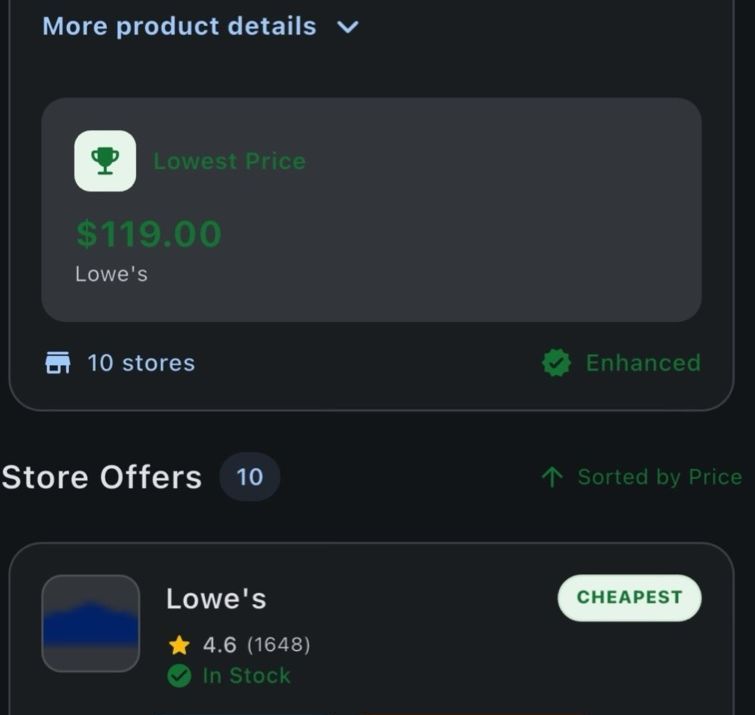
- Scan the barcode of the item on the shelf with Price Match Paradise. No account needed to start.
- Review matching offers across supported retailer sources, with stock status and price-match guidance when the retailer data is available.
- Decide in the aisle: ask for a match, buy it here because it's already the best price, or pick it up where it's cheaper.
How to make it stick
- Same time every week, such as Sunday morning with coffee.
- Keep a "greatest hits" list of 15–20 meals your household likes, and rotate them.
- Theme nights (taco Tuesday, pasta Wednesday) cut decision fatigue.
- Track the savings: compare your spending with the USDA budget ranges.
FAQ
How do I start meal planning on a budget?
Start with what's already in your kitchen, plan 4 to 5 dinners around this week's sales, reuse ingredients across meals, and shop from a list.
How much can meal planning save?
It depends on your household, but planning cuts impulse buys, takeout and food waste, often the biggest leaks in a grocery budget.
How many meals should I plan per week?
4 to 5 dinners is a good start, leaving room for leftovers and flexible nights.
What are the cheapest meals to plan?
Meals built on rice, pasta, beans, eggs, potatoes, frozen vegetables and a whole chicken that stretches across several dinners.
Plan smart. Shop cheaper.
Scan the items on your list and compare the same product at 50+ supported retailer sources. Free to start, no account needed.
Keep reading
Price Match Paradise Team
We build the barcode price comparison app that helps shoppers find the lowest price on the item in their hand. Spotted a policy change? Let us know.