The fastest ways to save on groceries are to plan meals around what you already have and what's on sale, shop with a list, compare unit prices instead of package prices, choose store brands for basics, and check whether another nearby store sells the same item for less before you buy. Then use price matching or price-drop refunds where your store offers them.
Before you shop
1. Shop your kitchen first
Before planning anything, check the fridge, freezer and pantry. Build the first meals of the week around what needs to be used up. Food you already paid for and then throw away is the most expensive food you buy.
2. Plan meals around the sales
Look at your store's weekly ad or app, then plan meals around what's discounted, especially proteins and produce. Planning first and hoping things are on sale works the other way around. (Here's a 15-minute weekly deal routine.)
3. Plan "overlap" meals
Choose recipes that share ingredients (see a 20-minute meal planning system). The cilantro, sour cream or half a cabbage you bought for one dinner should feed another one later in the week instead of going to waste.
4. Write a list and stick to it
A list is the single best defense against impulse buys. Organize it by store section so you're in and out faster. Less time in the store means less money spent.
5. Set a weekly budget and track it
Pick a realistic number (here's what the USDA says is typical) and keep a running total as you shop. Knowing you're $12 over before checkout makes it easy to put back one or two "extras."
6. Eat before you go
It's a cliché because it works. Hungry shoppers buy more snacks, more convenience food and more things that weren't on the list.
7. Know which store is cheapest for what
No single store is cheapest for everything (here's why). One might win on produce, another on diapers and pantry brands, a warehouse club on bulk staples. Knowing your stores' strengths saves more than any coupon. The barcode scanning method below makes this easy.
In the store
8. Compare unit prices, not package prices
The shelf tag usually shows a price per ounce, pound or count in small print. That's the number to compare. The bigger package isn't always cheaper per unit, especially when the smaller size is on sale. Unit prices also expose shrinkflation.
9. Buy store brands for basics
Flour, sugar, canned tomatoes, frozen vegetables, milk, cleaning supplies and over-the-counter medicine are often very similar to the name brand at a noticeably lower price. Try the store brand once. If you can't tell the difference, switch for good. (See where store brands are the easiest switch.)
10. Look high and low
The most profitable products for the store tend to sit at eye level. Cheaper options and store brands are often on the top and bottom shelves. (More store layout tricks.)
11. Buy produce in season, and frozen out of season
In-season produce is cheaper and tastes better. Out of season, frozen fruit and vegetables are an inexpensive choice that won't spoil before you use it.
12. Skip pre-cut and pre-washed
You pay extra for convenience: pre-cut fruit, shredded cheese, pre-marinated meat, single-serve packs. Five minutes with a knife or grater usually costs much less.
13. Scan before it goes in the cart
This is the step almost nobody does, because checking other stores' prices used to take too long. Now it takes one scan:
- Scan the barcode of the item on the shelf with Price Match Paradise. No account needed to start.
- Review matching offers across supported retailer sources, with stock status and price-match guidance when the retailer data is available.
- Decide in the aisle: ask for a match, buy it here because it's already the best price, or pick it up where it's cheaper.
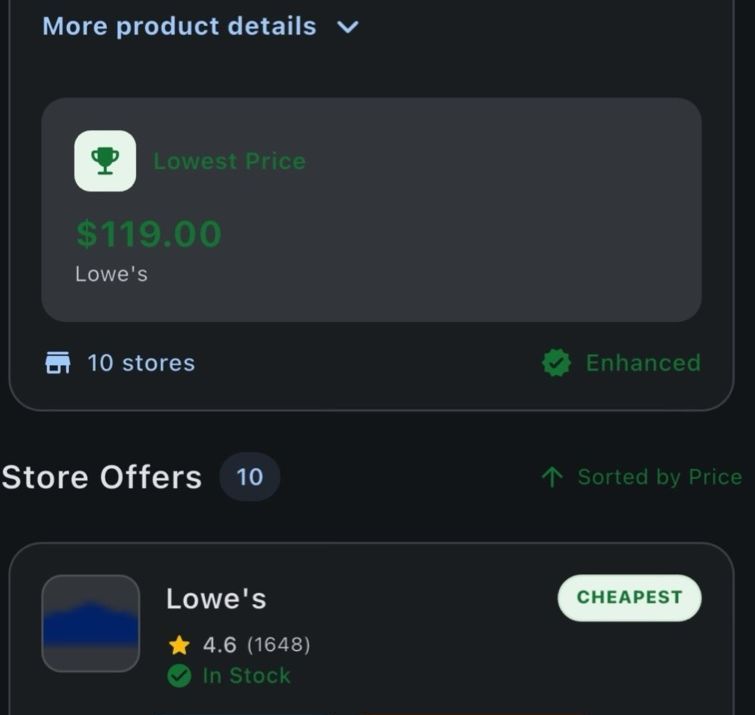
It's most useful on items that are identical everywhere and add up fast: diapers, formula, coffee, detergent, paper goods, vitamins and medicine.
14. Ask for a price match where it's offered
If your store matches competitors and another store is cheaper, ask at checkout. Fewer stores match other stores' prices in 2026, so check the rules first. Our price matching guide lists who still does.
15. Buy in bulk only what you'll actually use
Bulk saves money on things that keep and that you use constantly: rice, oats, toilet paper, detergent, frozen items. It wastes money on perishables that go bad and on "deals" you'd never have bought otherwise. Check the unit price even at warehouse clubs. Bulk isn't always cheaper. (When bulk is worth it.)
16. Don't shop the endcaps blindly
End-of-aisle displays look like deals, but they're often just promotions. Compare the unit price with the same item in the regular aisle.
At checkout
17. Use the store's free loyalty program and digital coupons
Most grocery chains put their best prices behind a free account (are they worth it?). Load digital coupons in the app before you go. It takes a minute and they apply automatically.
18. Watch the screen as items ring up
Sale prices don't always make it into the register system. Watch the prices as items scan and point out mistakes right away. It's much easier than fixing them later. See how to check your receipt in 60 seconds.
19. Stack where it's allowed
Many stores let you combine a manufacturer coupon with a store coupon or a sale price. Stacking rules vary by store, so check the coupon policy. See coupon stacking explained.
20. Pay in a way that pays you back
A cash-back card with a grocery category, a store-brand card or a cash-back app can return a few percent on every trip. Only use credit if you pay the balance in full every month.
After you shop
21. Scan your receipt
A receipt scanner compares what you paid with prices at other stores and shows exactly which items you overpaid for. Over a few weeks, it shows you which store is cheapest for your usual basket.
22. Claim price drops
Some stores refund the difference if their own price drops after you buy: Target within 14 days, Costco within 30 days. Keep your receipts or use the store app.
23. Store food so it lasts
Keep herbs in water, berries dry, bread in the freezer and leftovers in clear containers at eye level. Food you can see is food you eat.
24. Cook once, eat twice
Double a recipe and freeze half, or turn Sunday's roast chicken into Monday's soup. Planned leftovers replace takeout, which is where many grocery budgets really leak.
25. Review the month, then adjust
At the end of each month, look at what you spent and where. Did one store keep coming out cheaper? Did the same foods keep getting thrown out? Small changes compound.
The 5 highest-impact tips (if you only do a few)
- Plan meals around what you have and what's on sale (tips 1–2).
- Shop with a list (tip 4).
- Compare unit prices (tip 8).
- Switch basics to store brands (tip 9).
- Scan to find the cheapest store for the things you buy every week (tip 13).
FAQ
What is the fastest way to lower my grocery bill?
Plan meals around sales and what you already have, shop with a list, compare unit prices and switch basics to store brands. Then check whether another nearby store sells your regular items for less.
Is it worth shopping at more than one grocery store?
Often, yes, if the stores are on your usual route. Different stores are cheapest for different items. A barcode price comparison app shows which store wins for each item without extra trips.
Are store brands really as good as name brands?
For many basics like flour, sugar, canned goods, frozen vegetables and over-the-counter medicine, store brands are very similar and cost less. Try them one item at a time.
Is buying in bulk always cheaper?
No. Bulk saves money only when the unit price is lower and you use everything before it spoils. Always compare the unit price.
Do grocery stores price match?
Some do and many don't, and policies have tightened recently. Check your store's policy, and see our price matching guide for the major retailers.
Put tip #13 to work on your next trip.
Scan any barcode and see the same item at 50+ supported retailer sources in one search. Free to start, no account needed.
Keep reading
Price Match Paradise Team
We build the barcode price comparison app that helps shoppers find the lowest price on the item in their hand. Spotted a policy change? Let us know.