If an item rings up higher than the shelf price, point it out at the register or customer service and show the tag. Most stores will charge the lower price. Some retailers have voluntary policies that give you the item free or discounted, and some states have price-accuracy laws. In Michigan, for example, a store may pay the difference plus a bonus of ten times the difference (minimum $1, maximum $5) to settle an overcharge.
Why shelf and register prices don't match
- An expired sale tag is still on the shelf after the promotion ended.
- The price changed in the system but the tag wasn't updated yet, or the reverse.
- The tag is under the wrong product, like a different size or variety.
- The price needs a loyalty account or a digital coupon you didn't clip.
- A multi-buy condition, like "must buy 2," wasn't met.
- Weighed items were rung up with the wrong code or weight.
Most mismatches are honest mistakes, but they tend to cost shoppers money. That's why many states have weights and measures inspectors who check price accuracy.
What to do on the spot
- Watch the screen as items scan, especially sale items.
- Point it out politely and say where the tag is. A photo of the tag on your phone speeds this up.
- Ask about the store's scanning policy. Some retailers voluntarily give you the item free or discounted when it scans higher than the shelf price.
- If you've already left, bring the receipt to customer service. Check the receipt before you go. See the 60-second receipt check.
Your rights: price-accuracy laws
Rules vary by state. Michigan's scanner law is one of the best known. If you're charged more than the displayed price, you can notify the store, and the store can settle by refunding the difference plus a bonus of ten times the difference, at least $1 and no more than $5. If it doesn't, you may have further remedies under the law.
Other states and cities have their own item-pricing or scanning rules, and your state or local weights and measures office generally handles price-accuracy complaints. Search "[your state] weights and measures price complaint."
The bigger overcharge: paying more than another store
A correct price can still be a high price. Prices for the same item vary a lot between stores, and even between locations of the same chain (here's why). A quick scan shows whether you're paying the lowest price nearby:
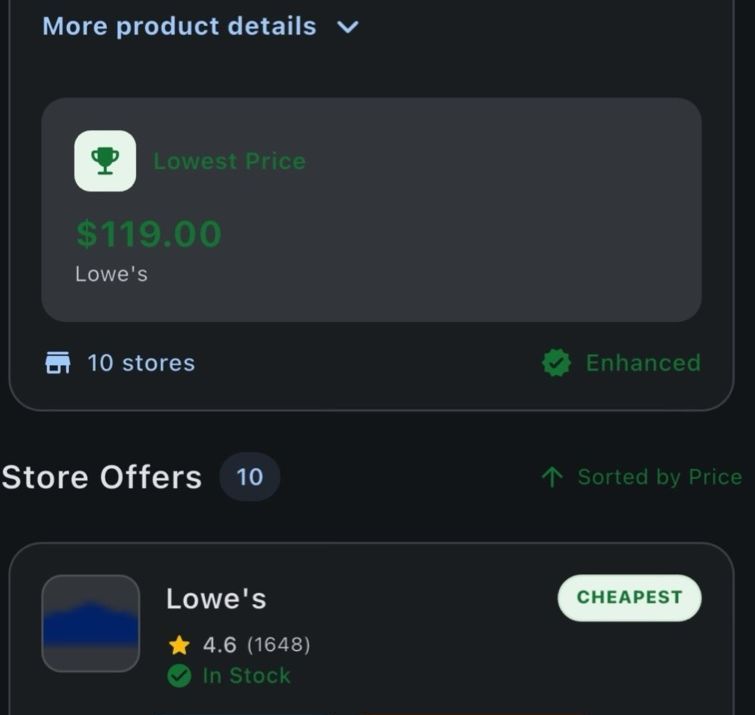
- Scan the barcode of the item on the shelf with Price Match Paradise. No account needed to start.
- Review matching offers across supported retailer sources, with stock status and price-match guidance when the retailer data is available.
- Decide in the aisle: ask for a match, buy it here because it's already the best price, or pick it up where it's cheaper.
FAQ
What happens if an item rings up higher than the shelf price?
Point it out at the register or customer service. Most stores will charge the lower shelf price, and some have policies that give you the item free or discounted.
What is Michigan's scanner law?
If you're charged more than the displayed price in Michigan, the store can settle by refunding the difference plus a bonus of ten times the difference, with a minimum of $1 and a maximum of $5.
Do stores have to honor the shelf price?
It depends on the state and the store. Many stores honor it as a policy, and some states have price-accuracy laws. Your state's weights and measures office can tell you the local rules.
Where do I report a store with frequent price errors?
Contact your state or local weights and measures office, or your state attorney general's consumer protection office.
Pay the lowest price, not just the right one.
Scan any barcode and compare the same item at 50+ supported retailer sources in one search. Free to start.
Keep reading
Sources: Michigan's scanner law (Michigan Department of Attorney General) · NIST: U.S. retail pricing laws and regulations. Summary as of September 22, 2026. Policies change and individual stores have discretion, so confirm with the store. Price Match Paradise isn't affiliated with or endorsed by any retailer mentioned.
Price Match Paradise Team
We build the barcode price comparison app that helps shoppers find the lowest price on the item in their hand. Spotted a policy change? Let us know.