The same item costs different amounts at different stores because each retailer uses its own pricing strategy (everyday low prices or frequent sales), its own costs and competition in that area, and deliberate deep discounts on a few items to attract shoppers. Prices can even differ between locations of the same chain. The only reliable way to know which store is cheapest for a specific item is to compare the exact product.
Two pricing strategies: everyday low vs. high-low
Most grocery retailers lean toward one of two approaches:
| Everyday low price (EDLP) | High-low (Hi-Lo) | |
|---|---|---|
| How it works | Consistently low shelf prices, fewer big sales | Higher regular prices, frequent deep sales and coupons |
| Best for | Shoppers who want one predictable trip | Shoppers who plan around the weekly ad |
| Watch out for | "Low" isn't always lowest on every item | Paying regular price on anything not on sale |
That's why a Hi-Lo store can beat an EDLP store on the items in this week's ad and lose badly on everything else. Neither store is "the cheap one" for your whole list.
Loss leaders: the deals that get you in the door
Stores sometimes price a few popular items very low, occasionally at or below cost, to bring you in. Think front-page ad items, holiday turkeys, milk or eggs. The strategy works because most shoppers then buy the rest of their list at regular prices.
How to use it: buy the loss leaders, and compare the rest of the cart before you assume it's cheap too.
Why prices vary by location, even at the same chain
Many chains set prices by area, sometimes called zone pricing. Rent, wages, delivery costs and, most of all, local competition all affect what a store charges. A location with a discount competitor next door may be priced lower than the same chain's store across town.
That's also why national "which store is cheapest" rankings only go so far. What matters is the stores near you.
What shelf placement tells you
- Eye level is prime space and often holds the brands and products the store most wants to sell. Manufacturers may pay for placement and promotions.
- Top and bottom shelves often hold store brands and cheaper options.
- Endcaps and displays look like deals, but they're often promotions rather than the lowest price in the aisle. Compare the unit price.
Store brands: where stores make their margin
Store brands (private label) usually cost shoppers less than name brands, and they're a growing share of what people buy. According to the Private Label Manufacturers Association, U.S. store brand sales hit a record $282.8 billion in 2025, reaching 21.3% of dollar sales and 23.5% of units. More in Store Brand vs. Name Brand: Is It Worth It?
Package sizes, unit prices and shrinkflation
Different stores often carry different sizes of the same product, which makes shelf prices hard to compare. The unit price (per ounce, count or sheet) is the fair comparison. There's no federal requirement to show unit prices. According to NIST, nine states and Washington, D.C. mandate them, and others set rules for stores that choose to show them.
Package sizes also change over time. When a product shrinks and the price doesn't, that's shrinkflation, and the Bureau of Labor Statistics treats it as a price increase.
Digital shelf labels and changing prices
More stores are replacing paper price tags with electronic shelf labels that can be updated remotely. Retailers say this saves labor and keeps shelf and register prices in sync. Some shoppers worry it could make prices change more often. Either way, it's another reason to check the price when you're actually buying, not rely on what you remember from last week.
How to use all this to pay less
- Scan the barcode of the item on the shelf with Price Match Paradise. No account needed to start.
- Review matching offers across supported retailer sources, with stock status and price-match guidance when the retailer data is available.
- Decide in the aisle: ask for a match, buy it here because it's already the best price, or pick it up where it's cheaper.
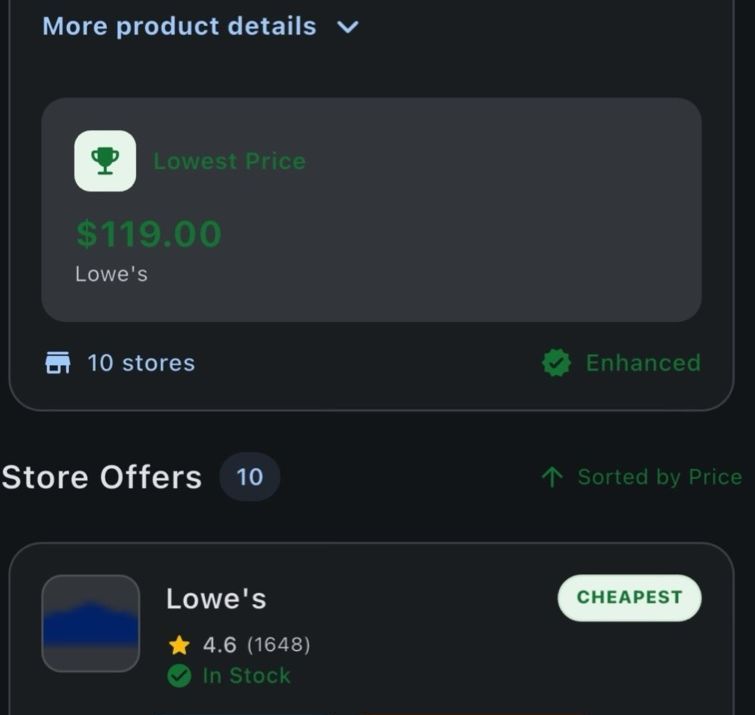
- Compare exact products, not "the same kind of thing." A barcode scan compares identical items across stores.
- Split your list between stores on your usual route if they win on different items.
- Buy loss leaders and stock up on sale-cycle lows. See How to Find the Best Deals Every Week.
- Use price matching where it's still offered. See who still matches.
FAQ
Why does the same item cost different amounts at different stores?
Each retailer has its own pricing strategy, costs and local competition, and uses deep discounts on a few items to attract shoppers. Prices can even differ between locations of the same chain.
Do grocery prices differ between locations of the same chain?
Often, yes. Many chains price by area based on local costs and competition, so two stores of the same chain can charge different prices for the same item.
What is a loss leader?
A product priced very low, sometimes at or below cost, to bring shoppers into the store, on the expectation that they'll buy other items at regular prices.
Is an everyday-low-price store always cheaper?
Not on every item. A store with frequent sales can beat it on sale items, and EDLP stores aren't the cheapest on everything. Compare the specific items you buy.
Are stores required to show unit prices?
There's no federal requirement. According to NIST, nine states and Washington, D.C. require unit pricing, and other states set rules for stores that choose to show it.
Find out which store is cheapest for you.
Scan any barcode and see the same item at 50+ supported retailer sources near you in one search. Free to start.
Keep reading
Sources: PLMA: 2025 private label sales · NIST Unit Pricing Guide (SP 1181) · BLS: Measuring shrinkflation. Summary as of September 22, 2026. Policies change and individual stores have discretion, so confirm with the store. Price Match Paradise isn't affiliated with or endorsed by any retailer mentioned.
Price Match Paradise Team
We build the barcode price comparison app that helps shoppers find the lowest price on the item in their hand. Spotted a policy change? Let us know.