Shrinkflation is when a product gets smaller (fewer ounces, sheets or pieces) while the price stays the same or rises. It's a hidden price increase. The U.S. Bureau of Labor Statistics counts it as one in the Consumer Price Index. The easiest way to spot it is to compare the unit price (per ounce or count) instead of the package price.
What shrinkflation looks like
- A 16 oz bag becomes 14.5 oz at the same price.
- A 12-roll pack of paper towels keeps the same count but has fewer sheets per roll.
- A cereal box stays the same height but gets slimmer.
- A "family size" snack quietly holds fewer pieces.
Because the shelf price doesn't change, most people don't notice. The Bureau of Labor Statistics does: when a product shrinks and the price stays the same, the BLS records it as a price increase in the CPI, because you're paying the same for less. The U.S. Government Accountability Office also reviewed product downsizing trends in a 2025 report.
A related trick is sometimes called skimpflation: the size stays the same, but the product or service gets worse, for example cheaper ingredients.
How to spot it: use the unit price
The unit price is the price per ounce, per pound, per count or per sheet. It's usually shown in small print on the shelf tag. It's the only fair way to compare:
| Before | After | |
|---|---|---|
| Package size | 16 oz | 14 oz |
| Shelf price | $4.49 | $4.49 |
| Unit price | 28.1¢ / oz | 32.1¢ / oz |
| Real change | About 14% more per ounce | |
Illustrative example.
There's no federal requirement to show unit prices. According to NIST, nine states and Washington, D.C. require them, and other states set rules for stores that choose to show them. If the tag doesn't show one, divide the price by the size.
Where shrinkflation shows up most
It's most common in packaged goods where small size changes are hard to notice: snacks and chips, cereal, candy and chocolate, coffee, paper towels and toilet paper, detergent, ice cream, yogurt and personal care products.
What to do about it
- Compare unit prices, not package prices. Every time.
- Compare other sizes. After a downsize, a different size of the same product can be the better deal.
- Try the store brand. See Store Brand vs. Name Brand.
- Compare stores. A downsized product can still be cheaper per ounce at another store.
- Stock up at the sale-cycle low on things that keep. See How to Find the Best Deals Every Week.
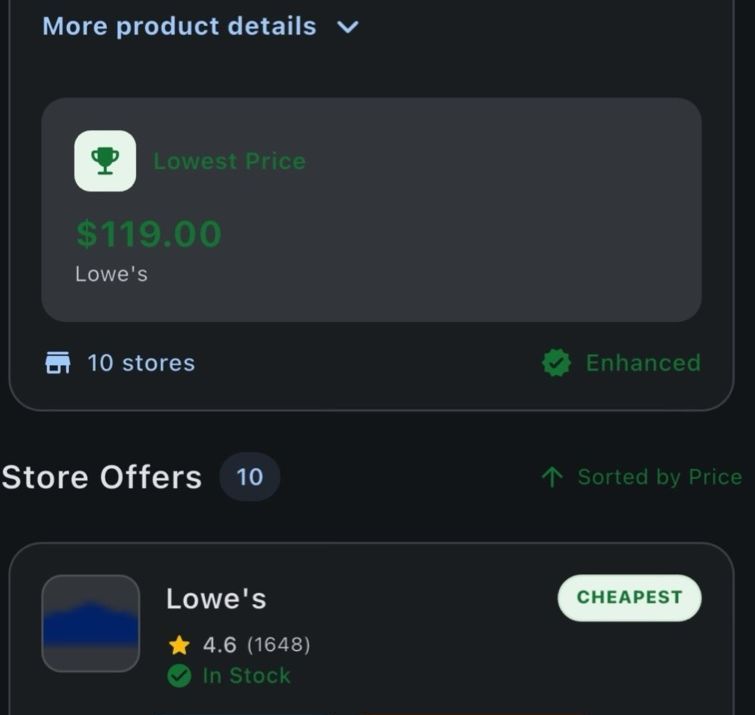
- Scan the barcode of the item on the shelf with Price Match Paradise. No account needed to start.
- Review matching offers across supported retailer sources, with stock status and price-match guidance when the retailer data is available.
- Decide in the aisle: ask for a match, buy it here because it's already the best price, or pick it up where it's cheaper.
Shrinkflation is one of several ways the shelf price can mislead. See How to Spot a Fake Sale and How Grocery Store Pricing Really Works.
FAQ
What is shrinkflation?
Shrinkflation is when a product gets smaller while its price stays the same or goes up. You pay the same, or more, for less.
Is shrinkflation legal?
Generally, yes, as long as the package accurately states the net quantity. Some lawmakers have proposed disclosure rules, and a 2025 GAO report reviewed policy options.
How do I spot shrinkflation?
Compare the unit price (per ounce, count or sheet) instead of the package price, and check the net quantity on the package against what you remember.
Does inflation data include shrinkflation?
Yes. The Bureau of Labor Statistics monitors product sizes and records a smaller package at the same price as a price increase in the CPI.
Are stores required to show unit prices?
There's no federal requirement. According to NIST, nine states and Washington, D.C. require unit pricing, and other states set rules for stores that choose to show it.
See the real price, every time.
Scan any barcode and see the same item at 50+ supported retailer sources in one search. Free to start, no account needed.
Keep reading
Sources: BLS: Measuring shrinkflation · GAO-25-107451: Shrinking product sizes · NIST: Uniform unit pricing. Summary as of September 22, 2026. Policies change and individual stores have discretion, so confirm with the store. Price Match Paradise isn't affiliated with or endorsed by any retailer mentioned.
Price Match Paradise Team
We build the barcode price comparison app that helps shoppers find the lowest price on the item in their hand. Spotted a policy change? Let us know.