A barcode (UPC or EAN) is a one-dimensional code that stores a short product number, and it's what registers and price comparison apps use to identify the exact product. A QR code is a two-dimensional square that can store much more, usually a web link. To compare prices, scan the barcode.
Side by side
| Barcode (UPC/EAN) | QR code | |
|---|---|---|
| Shape | Vertical lines | Square grid |
| Stores | A 12–13 digit product number | Links, text, much more data |
| Used for | Checkout, inventory, price lookup | Websites, coupons, menus, product info |
| Compare prices? | Yes | Usually not |
Why barcodes are best for price comparison
A product barcode identifies the exact product (brand, item and size), and the same number is used at every store that sells it. That's what makes it perfect for comparing prices. More in what the numbers on a barcode mean.
What QR codes on packaging do
QR codes on products usually link to a website: recipes, ingredients, recycling information, promotions or registration. Some newer product codes combine product identification with a link, and the industry is gradually adding 2D codes to packaging. Today, the standard product barcode is still the most reliable way to identify a product for price comparison.
How to scan the right code
- Scan the barcode of the item on the shelf with Price Match Paradise. No account needed to start.
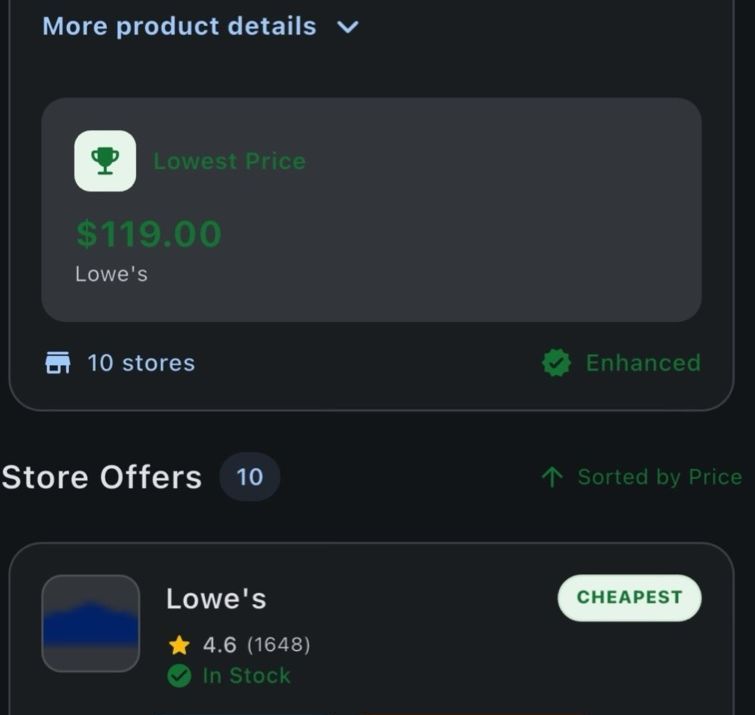
- Review matching offers across supported retailer sources, with stock status and price-match guidance when the retailer data is available.
- Decide in the aisle: ask for a match, buy it here because it's already the best price, or pick it up where it's cheaper.
Having trouble scanning? See 9 quick fixes.
FAQ
What is the difference between a QR code and a barcode?
A barcode stores a short product number in vertical lines. A QR code is a square grid that can store much more information, usually a web link.
Can I compare prices by scanning a QR code?
Usually not. QR codes on packaging typically link to a website. Scan the product barcode (UPC/EAN) to compare prices.
Are QR codes replacing barcodes?
The retail industry is gradually adding 2D codes to packaging, but standard product barcodes are still used at checkout and for price lookup.
Are QR codes safe to scan?
Generally, but a QR code can link to any site. Check the web address before entering personal or payment details.
Scan the barcode. Save the difference.
Compare the same item at 50+ supported retailer sources in one search. Free to start, no account needed.
Keep reading
Price Match Paradise Team
We build the barcode price comparison app that helps shoppers find the lowest price on the item in their hand. Spotted a policy change? Let us know.